


 1 Min
1 Min In OTC

Follow this topic

Bookmark

Record learning outcomes
Contraception has come a long way since the second century AD, when the Greek physician Soranus of Ephesus suggested that women should hold their breath during intercourse and sneeze afterwards to expel the semen. Then, Soranus advised, women should jump backwards seven times.
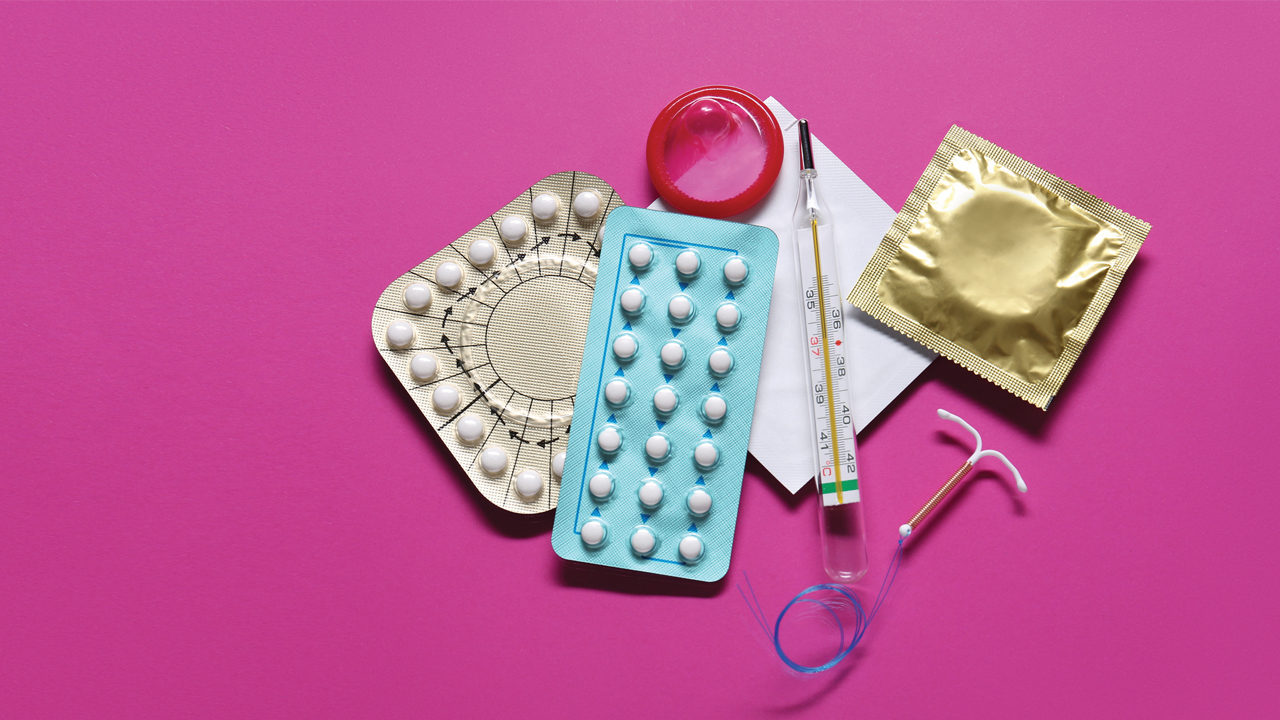
More recently, despite numerous effective modern contraceptives (see Table 1), a Government report noted that 45 per cent of pregnancies and a third of births in England are either “unplanned or associated with feelings of ambivalence”.
However, recent changes to the NHS Pharmacy Contraception Service (PCS) mean that more people, including those who are particularly vulnerable, can better control their reproductive health.
Community Pharmacy England believes that the PCS “will provide consistent access from community pharmacies across England to free oral contraceptives and oral emergency contraception for individuals of childbearing potential, removing variation in the service offer found within locally commissioned services”.
It adds that the service will help tackle health inequalities by offering wider access to contraception and by supporting high-risk communities and vulnerable individuals; there is no requirement for people to be registered with a GP in order to access the service.
Fundamental changes
A person may self-refer or be signposted to the service by their general practice, sexual health clinic or equivalent. A pharmacy may also identify a person as suitable for the service and highlight it to them.
The pharmacist or pharmacy technician can then offer a confidential consultation and as part of that, reach a shared decision with the person on the supply of oral contraception or oral emergency contraception, ensuring clinical appropriateness.
Where body mass index and blood pressure measurements are performed within the pharmacy, these can be conducted by the pharmacist or pharmacy technician as part of the consultation or by a suitably trained and competent member of the pharmacy staff in advance of the consultation.
Community Pharmacy England notes that standard operating procedures (SOPs) for the service need to include the process for escalating clinical and non-clinical issues.
Indeed, the PCS emphasises the importance of recording information, particularly related to safeguarding and the details of any chaperones. With this in mind, it is important that all involved staff receive up-to-date safeguarding training.
Where a pharmacy technician provides the PCS, the SOP must explain how the responsible pharmacist will supervise activities connected to the supply of medicines. All PCS consultations must be verbal, provided from the pharmacy premises and directly with the person accessing the service and who will use the contraceptive
“If someone asks for emergency contraception, it can be a chance to have a wider conversation”
“Pharmacies are a vital local source of contraception,” says Bekki Burbidge, information specialist at the Family Planning Association.
“We welcome the Pharmacy Contraception Service and are delighted that pharmacies can provide free emergency contraception.
“This removes cost barriers and gives options to people unable to get an appointment at a clinic or GP, who may otherwise have had to pay or risk going without emergency contraception.
“We hope that being able to access free oral contraception through pharmacies will provide a convenient option for those who need it as well as helping to ease some of the demand on other services.”
Armed with accurate information about contraception options, pharmacy teams can help guide customers towards the best choice for them. Some customers may show a preference for non-hormonal contraceptive methods.
“This is often due to worries about the side effects of hormonal contraception, which can be based on negative personal experience, but also comes from talking to friends or family, or from myths and misinformation, including inaccurate information on social media,” Bekki explains.
“Hormonal methods don’t suit everyone – but they also work brilliantly for many and can have a number of benefits. So, there’s more work to be done to make sure everyone who needs contraception can make an evidence-based, informed choice about what’s right for them at different stages of their lives."
"We need to listen to people about why existing methods of contraception aren’t working for them and find ways to tackle myths and misinformation.”
The pill
The pill is the term often used to describe the combined oral contraceptive pill. These pills contain the hormones oestrogen and progestogen and stop the ovaries from releasing an egg, thereby preventing pregnancy.
This is a good option for those who are not looking to conceive, and is over 99 per cent effective when used correctly – that includes taking it at the same time every day for maximum effectiveness.
Customers starting the pill for the first time should also read the in-pack leaflet explaining the potential side effects, how to take the pill, and what to do if they forget a day or experience side effects.
Some women may have been prescribed the pill for help with acne, heavy or painful periods or endometriosis.
The pill may not be suitable for everyone, including people with obesity, or who are aged 35 or over and who smoke. It may also not be suitable for people who have
ever had:
- A family history of blood clots under the age of 45
- A stroke, narrowed or blocked arteries
- Cardiovascular issues
- Migraines with aura
- Breast cancer
- Diabetes
- Gallbladder or bile duct problems
- Liver cancer or severe cirrhosis.
There are two main ways to take the combined pill:
- Everyday pills: these should be taken every day. Each packet contains dummy pills that do not contain any hormones and these are a different colour to the active pills
- 21-day pills: these should be taken for 21 days, followed by a break where no pills are taken for seven days.
With both types of combined pill, users will usually have bleeding like a period when they take the dummy pills or have the seven-day break.
It is important to remind customers to always read and understand the instructions for use.
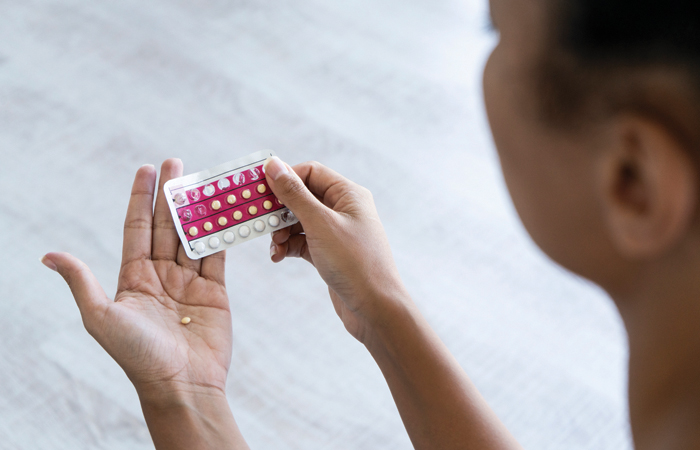
The Pharmacy Contraception Service has given women greater choice and easier access to contraceptives.
The mini pill (POP)
The mini pill, or progestogen-only pill (POP), is another type of hormonal contraception. They contain progestogen but no oestrogen. Like the combined pill, the mini pill prevents pregnancy by stopping the ovaries from releasing eggs.
It is also over 99 per cent effective when used correctly, but as well as being available via the PCS, some brands are available for customers to purchase over the counter.
Some customers may use the mini pill to help ease painful or heavy periods or endometriosis.
The mini pill is not suitable for everyone and people who have ever had any of the following should be referred to the pharmacist:
- Cardiovascular disease
- Stroke
- A liver condition, such as cirrhosis
- Breast cancer
- A condition that affects the kidneys.
“Pharmacies are a vital local source of contraception”
The mini pill is also different to the combined pill in that an active pill is taken every day and there is no period-like break. There are 28 pills in a pack. When users finish a pack, they should start a new pack the next day.
There are three types of progestogen-only pill:
- Traditional progestogen-only pill
- Desogestrel pill
- Drospirenone pill.
In all cases, it is important to take one pill at the same time every day. If someone forgets to take their pill, they will still be protected against pregnancy if they:
- Take their traditional progestogen-only pill within three hours of the time they usually take it
- Take their desogestrel pill within 12 hours of the time they usually take it
- Take their drospirenone pill within 24 hours of the time they usually take it.

Pharmacy teams can be a great help in guiding customers to choose the right fertility tests, conception aids and pregnancy supplements.
Condoms
Condoms are a popular form of contraception as they are hormone-free and readily available in most pharmacies, as well as in a variety of other outlets. Used correctly, they are up to 98 per cent effective.
Another benefit of condoms is that they help to prevent not just pregnancy but also the transmission of sexually transmitted infections (STIs).
Condoms are simple to use, but customers should remember a few important points:
- A new condom needs to be used for every use
- Follow the packet instructions to see how to put the condom on. If put on incorrectly, it may come off during sex
- Check that the condom is not past its expiration date, which can impact its effectiveness
- Check for the European CE mark, or UKCA mark, which indicates that the product has been tested to high safety standards.
Some condoms are not suitable for vegans as they contain animal-derived ingredients such as casein, which helps to soften the latex they are made from. However, vegan friendly condoms are available and can be highlighted as such in store.
In case of emergency
For some customers, oral contraception will be an emergency request – for use when they fear they may have become pregnant after a contraceptive failure or because they have not used any contraception at all.
Emergency hormonal contraception (EHC) pills are known colloquially as “morning after” pills. There are many myths surrounding their use, as well as stigma.
Pharmacy teams can play a significant part in dispelling these myths – such as the idea that you can only take EHC a handful of times in your life – and helping customers feel comfortable asking for it in the pharmacy.
EHC is available as part of the Pharmacy Contraception Service. Alternatively, some brands are available to purchase over-the-counter following a consultation with a pharmacist.
Always refer any customer enquiring about EHC to a pharmacist or pharmacy technician.
Two main types of EHC pills are used in the UK:
- Levonorgestrel, which needs to be taken within three days (72 hours) after sex
- Ulipristal acetate, which needs to be taken within five days (120 hours) after sex.
The sooner EHC is taken, the more effective it is.
Another form of EHC is an emergency IUD (intra uterine device). This is a small plastic T-shape device that a specially trained nurse or doctor can put into the womb up to five days after sex.
An IUD can be left in as a more permanent method of contraception, and can last for between five and 10 years, depending on the type.
Communication skills
Any member of the pharmacy team who is discussing contraception services needs to offer a sympathetic, understanding and non-judgemental ear, especially when discussing emergency contraception.
“People who need contraception often feel they may be shamed or feel embarrassed about accessing contraception at a pharmacy, particularly emergency contraception,” says Bekki.
"Be clear that your pharmacy offers a welcoming, private and non-judgemental service and that any discussions about contraception and sex will take place in private – not in front of other customers. Posters and flyers are an easy way to do this – so make full use of the resources available to support the Pharmacy Contraception Service.”
For the best patient care, pharmacy staff should have the communication skills to be able to deliver a friendly and easily accessible service, where no one feels embarrassed.
“Questions about sex and contraception can sometimes feel intrusive. When talking to patients, it’s important to ask open-ended questions so they feel able to talk about wider issues and concerns, and ask questions,” says Bekki.
“Try to be clear about why any specific questions are necessary – whether that’s to establish the suitability of a particular method, offer advice about ongoing contraception or for safeguarding purposes. Be a good listener. Listen to any concerns that patients may have about contraception and make sure they know where they can get help or follow-up care if they need it.”
The pharmacy team can also signpost customers to local services that provide long-acting reversible contraception (LARC) such as implants and injections.
These can be good options for people who are unlikely to remember to take a pill at the same time each day but need reliable contraception.
“Think about wider opportunities to help,” suggests Bekki. “For example, if someone asks for emergency contraception, it can be a chance to have a wider conversation about whether they’re using contraception, whether their regular method suits them and what else is available.”

Couples looking to conceive can improve their chances by maintaining a healthy lifestyle, cutting out alcohol consumption and stopping smoking.
Fertility factors
Pharmacy teams can also share advice with customers who are looking to conceive. There are a variety of home fertility tests and aids available for sale in pharmacies, such as digital ovulation test kits, ovulation test strips, sperm count test kits and conception cups.
Conception cups can be inserted after sex to push sperm close to the cervix to increase the chances of conception, and can be worn for 20 minutes to a maximum of one hour. Your pharmacy may also offer fertility testing kits with results and advice available from a doctor within 72 hours. These kits can determine:
- If an egg has been released during the menstrual cycle by testing for progesterone
- If the number of eggs the user has is normal for their age. This is called an anti-müllerian hormone (AMH) test
- Whether or not the pituitary gland is producing the right level of hormones, which can affect the way the ovaries work
- Polycystic ovary syndrome (PCOS), which can affect the release of eggs.
NHS advice is that customers who want to conceive should have sex every two to three days without using contraception, and have sex during the time of ovulation – usually 12 to 16 days before a period starts.
It is important for both partners to maintain a healthy weight, not to smoke and to stop drinking alcohol. Remind customers who are trying for a baby or who are pregnant to take a 400mcg folic acid supplement every day to help prevent neural tube defects in the unborn baby.
Red flags
If customers are following the above advice and are still finding it difficult to conceive, watch out for the following red flags, which indicate they should be referred to the pharmacist:
- Couples who have been trying to conceive for over a year, with no success
- Anyone aged 36 or over who has not conceived within six months of trying
- Anyone with a long-term medical condition who wants advice about becoming pregnant
- Anyone who takes regular medication, as some medicines – including OTCs and herbals – can affect a pregnancy or be contraindicated.

Share:


In OTC